The Hidden Language of Stitch: Symbolism in Cross Stitch & Embroidery
By Melanie & Dominique
Embroidery has never been just decoration.
For centuries, stitches carried meaning. Motifs told stories, marked identity, and expressed beliefs without using words. What looks like a simple flower or animal often holds a deeper message.
Why symbolism matters in embroidery
Before literacy became widespread, textiles were a way to communicate.
A stitched motif could show where someone came from, their status, or what they valued. In many regions, embroidery worked like a personal signature. You could read a story through fabric and thread.
Even today, these meanings have not disappeared. We may choose designs for their beauty, but the symbolism still shapes how they feel.
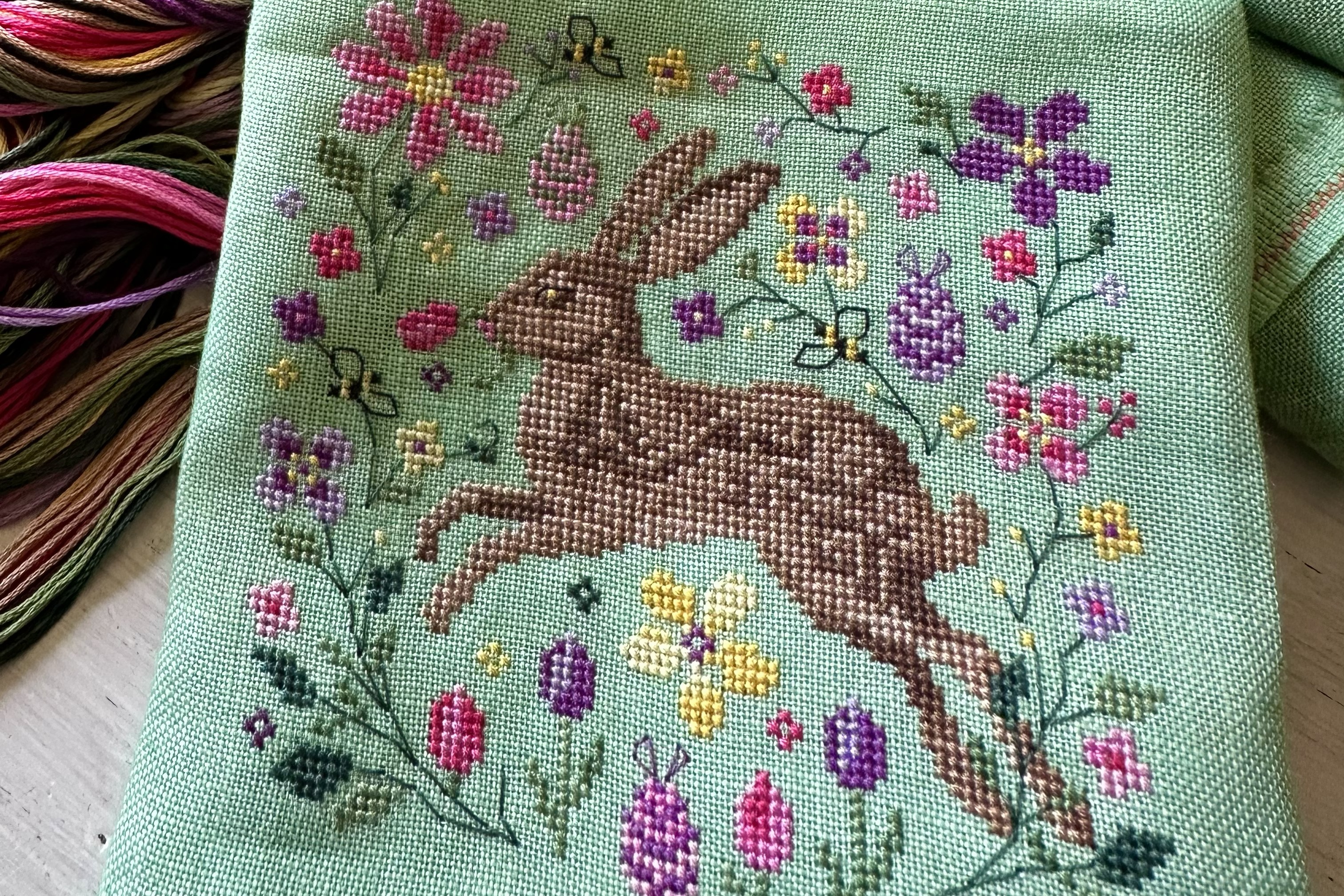
The hare: renewal, intuition, and quiet strength
The hare is one of the oldest symbolic animals in European folklore.
It is linked to spring, renewal, and fertility. It also connects to the moon and natural cycles, which reinforces its association with change and transition.
Unlike rabbits, hares are solitary and alert. They represent awareness and sensitivity to the world around them. There is also a sense of quiet strength in their presence.
In a spring design, the hare signals a shift. Winter is ending. Something new is beginning.
Flowers: messages stitched in colour
Flowers have long been used to express meaning in embroidery.
Each type carries its own message. Daisies suggest innocence and simplicity. Tulips point to renewal and love. Bluebells reflect gratitude and humility. Roses can represent love, but their meaning shifts depending on colour.
In traditional samplers, these choices were intentional. They reflected values, emotions, or wishes for the future.
Colour adds another layer. A yellow flower can feel confident and warm. A blue one can feel calm and thoughtful. The same motif can tell a different story depending on the palette.
Birds and small creatures: movement and connection
Animals often appear alongside central motifs to bring balance and life.
Birds are especially rich in meaning. They symbolise freedom, movement, and the connection between earth and sky. They can suggest change or a shift in direction.
Other small creatures often represent growth, adaptability, and harmony with nature. Even when they are subtle, they add energy and movement to a design.
Borders and patterns: protection and continuity
Borders are not just decorative.
In many traditions, repeating patterns were used for protection. They were believed to guard against negative influences while creating a sense of order and stability.
Geometric designs often reflect balance and structure. They frame the softer, more organic elements like flowers and animals, helping the whole piece feel grounded.
Bringing symbolism into your own stitching
You do not need to follow historical rules to use symbolism.
Start with intention. Think about what you want your piece to express. This could be a feeling, a season, or a personal story.
Then choose elements that support that idea. A spring design might include a hare, soft greens, and early blooms. A calming piece might focus on cool tones and open space. A bold design might use strong contrast and structured patterns.
Symbolism becomes more meaningful when it is personal.
The quiet layer inside every design
One of the strengths of embroidery is that meaning does not need to be obvious.
It can sit quietly within the design, in the choice of colour, motif, and composition.
That is what makes Spring Hare more than a seasonal piece. It carries a story of renewal, balance, and new beginnings.
And once you start seeing those layers, you begin to stitch them into your own work.
Melanie & Dominique x


